Book Publications

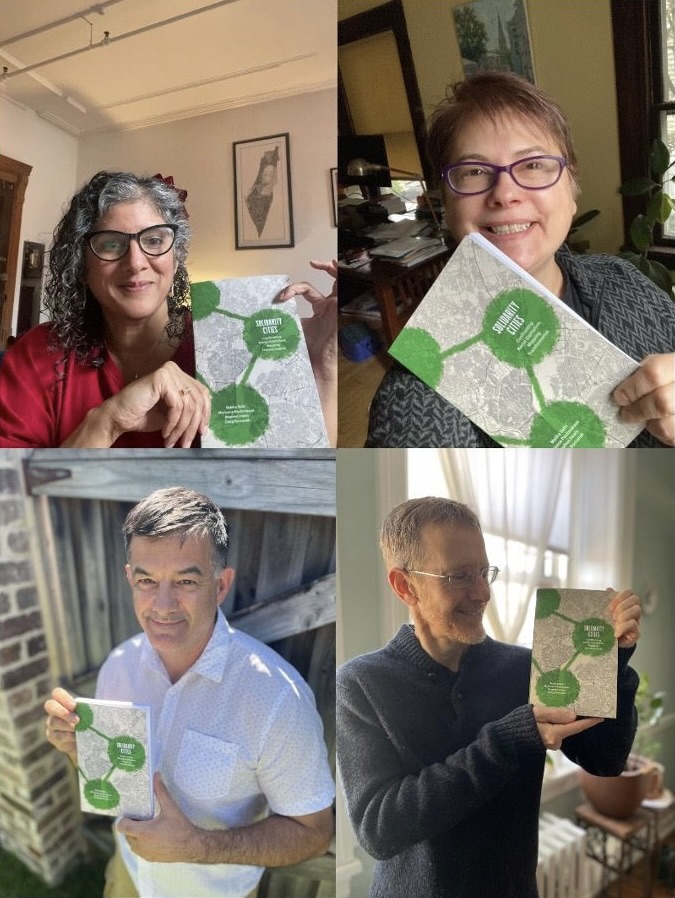
Solidarity Cities: Confronting Racial Capitalism, Mapping Transformation (University of Minnesota Press, January 2025)
Contemporary debates about capitalism and its alternatives often fall into two traps: either portraying economic life as so fully saturated by (racial) capitalism that alternatives are rendered insignificant, or idealizing these alternatives to the point of overlooking racial and economic divisions within social movement spaces. Solidarity Cities seeks to navigate both pitfalls.
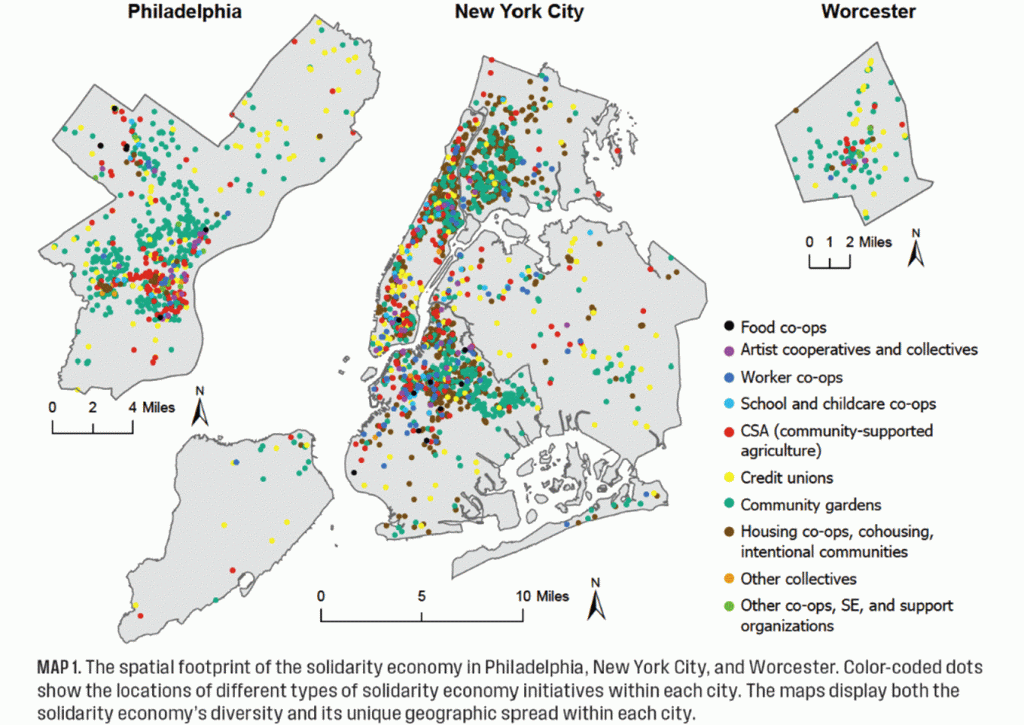
Drawing on detailed geographic analysis of New York City, Philadelphia and Worcester, Massachusetts, the book argues that solidarity economies—often invisible in mainstream economic narratives—permeate urban landscapes. These economies have enabled many urban communities, particularly in historically Black and Brown neighborhoods, to endure the oppression wrought by racial capitalism, including the devastating impacts of redlining. By building urban life with economic solidarity, these communities have made place differently from racial capitalist logics. In the process, they have built what we call Solidarity Cities.
The book abounds with examples illustrating how people actively build these Solidarity Cities, bridging racial and class fault lines, creating spatial imaginaries and placing solidarity economies at the forefront of urban life.
“Examining the impact of alternative solidarity-based community economic development, Solidarity Cities uniquely juxtaposes spatial patterns of solidarity activity with other demographic information, highlighting racial, class, and gender complexities in solidarity economies that are often missed or ignored. At the same time, the book does the double job of analyzing and celebrating how and where solidarity economies operate and thrive, providing ‘defense and resistance’ against society’s structural inequities.”
– Jessica Gordon Nembhard, author of Collective Courage: A History of African American Cooperative Economic Thought and Practice
Get 40% off with code MN92000 (through Dec. 31, 2025).
PRESS/MEDIA
Podcast episode on Urban Affairs Review hosted by Emily Holloway “New Books: Solidarity Cities” with co-authors Maliha Safri, Marianna Pavlovskaya, and Stephen Healy
Excerpt published in Social Policy Magazine “The Solidarity Economy is Thriving in Cities”
Excerpt published in Truthout “Where Urban Fault Lines Run Deep, Solidarity Cities Take Root”
Excerpt published by Next City: Solutions for Liberated Cities “How Solidarity Economies Take Hold”
Podcast episode on Acorn Radio hosted by Wade Rathke with co-author Stephen Healy
Podcast episode on New Books Network hosted by Elena Sobrino (Tufts University) with co-authors Maliha Safri, Marianna Pavlovskaya, and Stephen Healy
Featured Interview: Solidarity Cities on Democracy At Work
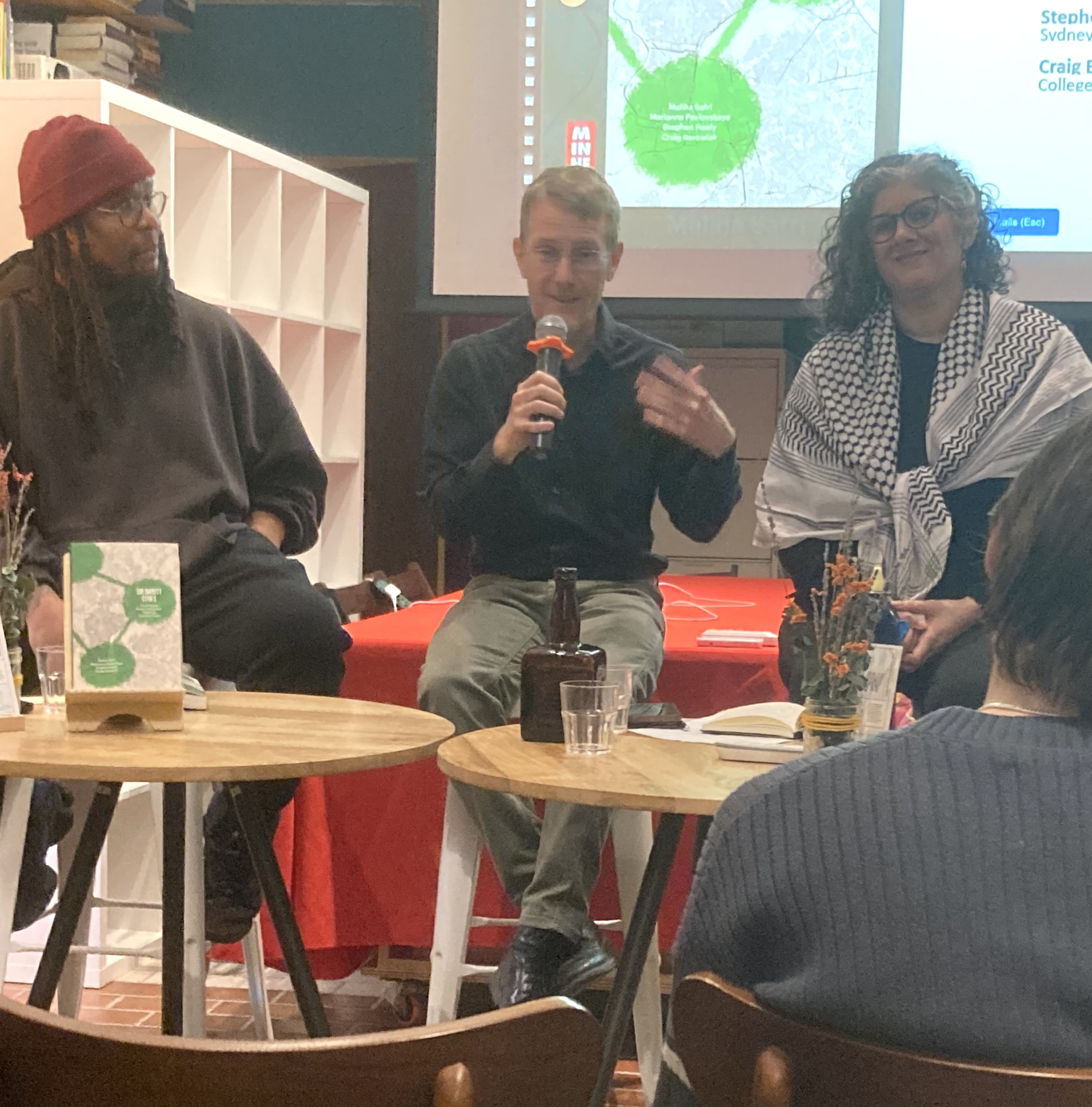
In this interview, my co-authors Maliha Safri and Stephen Healy discuss our book with Professor Richard Wolff on Democracy At Work in episode Economic Update: Solidarity Cities as Alternatives to Capitalism.
 Craig Borowiak